A cup of plain chicken curry has about 257 kcal, according to USDA data. Chicken tikka masala is usually richer, because the sauce is finished with cream and butter. In the homemade recipe worked out below, one portion comes to about 430 kcal, or about 640 kcal with a cup of rice. Restaurant versions vary the most, because you can’t see how much cream, butter or oil went into the pot.
This article is general information about calories in food. It is not medical advice. If you have a health condition or follow a medical diet, ask a doctor or a registered dietitian.
Chicken tikka masala calories at a glance
| Food | Amount | kcal |
|---|---|---|
| Chicken curry (USDA, generic) | 1 cup (240 g) | 257 |
| Creamy homemade chicken tikka masala (recipe below) | 1 portion (about 325 g) | about 430 |
| White rice, cooked, no added fat | 1 cup (158 g) | 204 |
| Heavy cream | 1 tablespoon (15 g) | 51 |
| Butter | 1 tablespoon (14 g) | 102 |
| Ghee | 100 g | 900 |
The USDA entry is a generic chicken curry from the Food and Nutrient Database for Dietary Studies (FNDDS). There’s no separate USDA entry for tikka masala, which is why the recipe breakdown below is the more useful number for a creamy version.
Where the calories come from
Here is a typical creamy tikka masala for four people, with every ingredient weighed raw and calories from USDA FoodData Central:
| Ingredient | Weight | kcal |
|---|---|---|
| Chicken breast, raw | 600 g | 720 |
| Plain whole-milk yogurt (marinade) | 150 g | 92 |
| Onion | 200 g | 80 |
| Canned tomatoes | 400 g | 64 |
| Canola oil | 30 g (about 2 tablespoons) | 265 |
| Butter | 1 tablespoon (14 g) | 102 |
| Heavy cream | 120 g (about ½ cup) | 408 |
| Total | 1,731 |
Divided into four portions, that is about 433 kcal each before rice. If the finished curry weighs 1,300 g, each portion is about 325 g, or roughly 133 kcal per 100 g. That’s about a quarter more per gram than USDA’s generic chicken curry.
The number that surprises most people: the cream, butter and oil add up to 775 kcal, nearly half of the pot. The chicken, which is what you see on the plate, is the other big part. The chicken in each portion also brings about 34 g of protein.
Why restaurant tikka masala varies so much
The same dish can differ by hundreds of calories between kitchens, for reasons you can’t see on the plate:
- The fat in the sauce. An extra tablespoon of butter adds about 102 kcal to the pot, an extra tablespoon of olive oil about 119, and an extra 2 tablespoons of cream about 102.
- The portion. A takeaway container may hold more than one serving. What matters is how much of it you ate.
- The sides. Rice and naan are often a big share of the meal’s calories. A cup of cooked white rice is about 204 kcal on its own.
If a restaurant publishes nutrition information for its dishes, use that. Otherwise, estimate the curry and the sides separately rather than as one guess for the whole plate.
How to estimate your portion
- At home: use the weigh-the-pot method. Weigh the finished curry, weigh your bowl, and take your share of the total. I explain it step by step in how to count calories in homemade food.
- With a measuring cup: a level cup of curry is about 240 g. Count how many cups went into your bowl.
- From a takeaway container: note roughly what fraction of the container you ate, and log rice and naan as their own items.
Logging chicken tikka masala in CaloriePix
In CaloriePix you can photograph the plate or describe it, for example “chicken tikka masala, about 1½ cups, with 1 cup of basmati rice”. For a mixed dish like a curry, the AI is set up to estimate it as one dish rather than inventing a list of ingredients it can’t see.
The result is an estimate, and nothing is saved until you’ve reviewed it. Change the portion if your bowl was bigger or smaller, and everything scales together. If you know the sauce was made with a lot of cream or butter, adjust the calories before you save.
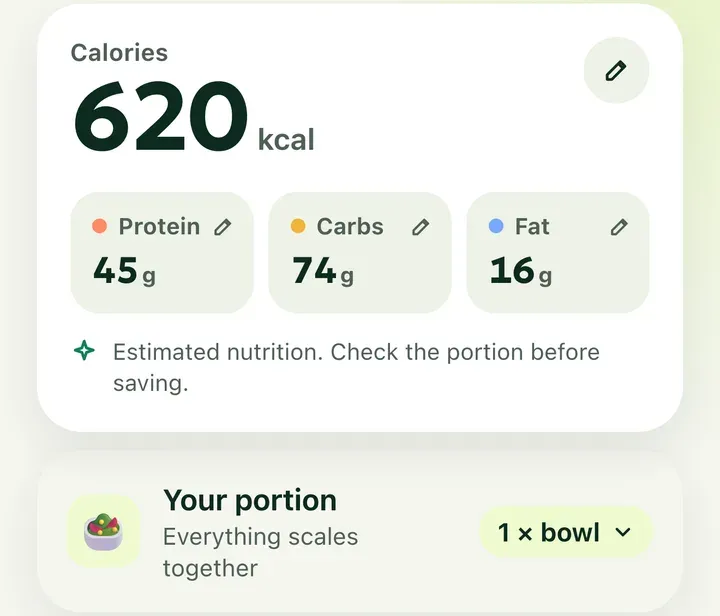
If tikka masala is a regular meal for you, use Save to my foods after reviewing it once, and log it again in one tap next time. To see where photo estimates struggle with sauces and hidden fat, read how accurate AI calorie counting is.
Making a lighter version at home
These swaps change the calories without changing the dish much:
- Use yogurt for part of the cream. Heavy cream is about 51 kcal per 15 g; plain whole-milk yogurt is about 9 kcal for the same weight. Stir it in off the heat so it doesn’t split.
- Measure the oil and butter instead of pouring. They are the easiest calories to add without noticing.
- Serve a smaller scoop of rice and add vegetables on the side.
To see how a curry night fits into your day, the calorie calculator gives you a daily target, and the protein calculator shows how much protein you’re aiming for.
This article is general information and is not medical advice.